Paradox….

May 24, 2009


paradox


.


kingdom quote2


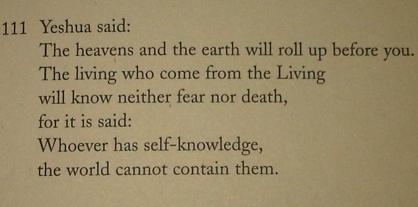
An excerpt from the remarkable book , “The Weakness of God: A Theology of the Event”  written by John Caputo


This post forms part of a syncroblog on the “Kingdom of God”, please note the links to the  other participants below:


I have just received Bruce Cockburn’s new album – Slice O Life.  It is a live album – just the man with his guitar.  Listening to this double album with many of Bruce’s best loved songs was for me a journey through the last twenty-eight years of my life.  Over the years the music of Bruce Cockburn has a huge influence on me. This influence has happened on many levels from the spiritual, political, social, environmental issues through to intimate love.

                                                                           bruce


The highlight of this album is the opening track “World of Wonders”.  Listening to the delicate and complex guitar patterning combined with the soulfulness of the lyrics was deeply moving for me.  It has been a long time since a piece of music has brought about such a strong personal emotional response.

Bruce has released a number of live concert albums over the years, however, in my opinion this is the best live album to date.  It has a wonderful intimacy which puts the listener in touch with not only the music but the maestro journeyman. 

Viva Bruce Viva!!!     and   Thank You!!!


As I reflect on the process of mourning, I am for a moment, stepping aside from the deconstructionist philosophy of Jacque Derrida and Post Modernism and  looking purely at the emotional and expressive reality of the event.

While viewing various works by other artists, I was deeply moved by the sorrow expressed in this painting.


youth-mourning


 The following description is taken from the Imperial War Museum, London, where the painting is on display:

“Sir George Clausen was an established Royal Academician when he painted Youth Mourning in 1916 at the age of 64.  It represents his personal reaction to the loss of a generation of young British soldiers during the conflict, and particularly to the death of his daughter Katharine’s fiance.

Youth, represented as a vulnerable young woman, mourns the death of her love, and by extension, the deaths of all young soldiers.  In the distance are the flooded battlefield craters.  This allegorical work combines traditional classicism and Christian symbolism with the stark landscape of the Western Front.”

Neil Young -Thrasher

April 25, 2009


I have started a triptych which is the final work in the (Im)possible series. The three canvasses exam Death, Mourning and Rebirth. I have also seen the three canvasses as reflecting on Good Friday. Holy Saturday and Easter Sunday. The main painting will be the (im)possibility of Mourning( Holy Saturday). As I worked through this process I have been considering  various forms of “Loss” .

Today I had conversation with a close friend regarding friendship and the loss of friendship and community. My friend mentioned that he was felt as if he was mourning past and lost friendships.

When Neil Young wrote “Thrasher”, in 1979, he was 34 years old, I first heard this in 1980 and I was 16 years old. It was the song that introduced me to Neil Young’s music and even though I have always love this song, I feel that a long journey of time is needed to fully appreciate this song.


Lyrics and brief notes:

Thrasher

They were hiding behind hay bales,
They were planting in the full moon
They had given all they had for something new
But the light of day was on them,
They could see the thrashers coming
And the water shone like diamonds in the dew. Read the rest of this entry »

A Prayer for the Kingdom

March 30, 2009

   prayer-of-the-kingdom-1  


     .

This prayer is an excerpt from the wonderful book , “The Weakness of God: A Theology of the Event”  written by John Caputo


  forgive

.


Nel mezzo del cammin di nostra vita

mi ritrovai per una selva oscura

ché la diritta via era smarrita.”


“Midway in the journey of our life

I came to myself in a dark wood,

for the straight way was lost.”


“The Christian religion is a religion of the flesh.  The human body is not merely a tiresome burden which we have to carry, a dark, heavy prison in which a radiant spiritual soul is locked up as punishment until it gains release in death.  It has a central part to play in our journey to God.  Until we have experienced its tug, its weight and resistance, there is no spiritual life possible for us.  There are lessons for us to learn, experiences for us to undergo, which can come to us only through the body. ”


.

This quotation is take from the Book “The way of Paradox: Spiritual life as taught by Meister Eckhart” Written by Cyprian Smith OSB

This posting was in response to a post seen at “Art of the Spirit” on Hildergard of Bingen: Illness and  creative purpose. I would encourage you to read this and view the video by Matthew Fox.


 Poured painting    Blood Picture

  Poured Painting  1963                   Blood Painting 1962


So Jesus said again, “I tell you the truth, unless you eat the flesh of the Son of Man and drink his blood, you cannot have eternal life within you.  But anyone who eats my flesh and drinks my blood has eternal life, and I will raise that person at the last day.  For my flesh is true food, and my blood is true drink.  Anyone who eats my flesh and drinks my blood remains in me, and I in him.  John 6 vs 53-56 (NLT)


.

      wine-crucifix 

Wine Crucifix  1957/78 Oil on canvas
1680 x 1030 mm frame: 1685 x 1035 x 40 mm


I was at the Tate Modern in London  two weeks ago, while on a short trip to England. The painting that really has inspired me from this visit is Wine-Crucifix by Arnulf Rainer. The curators of the Tate Modern have flanked a smaller painting on each side of this work creating a triptych from the three works that completes the scene at Golgotha. These two painting are works by Herman Nitsch.

As  Christians enter the 40 days of Lent, I will be focussed on the darkness  of the passion which reaches an intensity with Holy Saturday.

The Tate mentions the following details on the work:

Wine-Crucifix was originally painted as an altar-piece for the Student Chapel of the Catholic University in Graz, Austria. It hung loosely, without a frame, across a large window. Light shining through the cloth would reveal the shape of a cross beneath layers of paint. The title of the work evokes the transformation of wine into the blood of Christ. After the work was removed from its religious setting in the mid-1960s, the artist bought it back and in 1978 decided to rework it. ‘I realised that the quality and truth of the picture only grew as it became darker and darker’, Rainer has explained.


divine-beauty-1

divine-beauty-2